


$1.1T+
$75B
1M
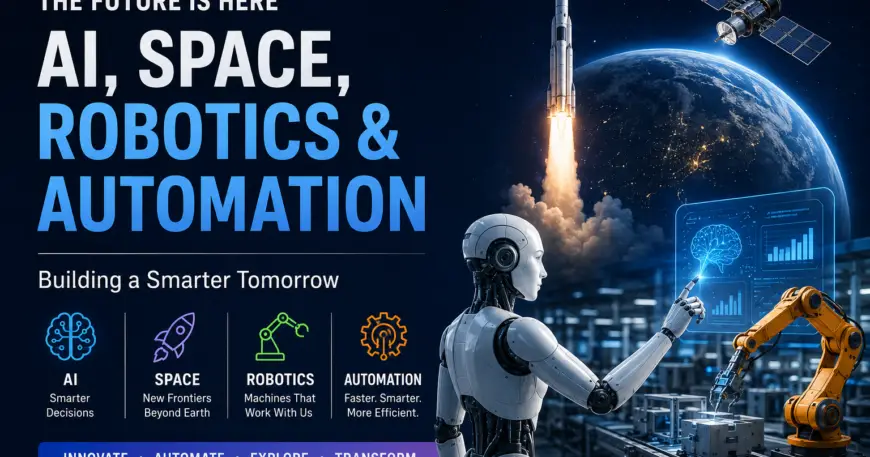
On June 12, 2026, something happened that no one in human history had ever done before. Elon Musk — the man behind SpaceX, Tesla, xAI, Neuralink, and X — crossed the $1 trillion net worth mark, becoming the world’s first and only trillionaire with AI and Space Technology. Not through luck. Not through inheritance. But through a relentless, almost sci-fi-like bet on three technologies: Artificial Intelligence, Space Exploration, and Robotics.
And here’s the thing — this isn’t just a rich guy getting richer. The technologies that made Musk a trillionaire are the same technologies that are about to reshape how students learn, how people work, what jobs exist, and how humanity lives. So let’s break it all down, plainly and honestly.
The Historic Moment — What Actually Happened
To understand how Musk crossed a trillion, you need to understand SpaceX’s IPO. For years, SpaceX was one of the most valuable private companies on Earth — but its shares weren’t publicly traded. That changed on June 12, 2026, when SpaceX went public on Nasdaq in what became the largest IPO in stock market history, raising $75 billion at $135 per share.
On opening day, shares jumped to around $161, pushing SpaceX’s total market value past $2.1 trillion. Since Musk owns a significant stake in SpaceX, this single event pushed his net worth from roughly $900 billion to over a trillion dollars — almost overnight. About $180 billion was added to his wealth in a single trading day.
But SpaceX’s IPO was just the final trigger. The fortune had been building across a portfolio of companies all sharing one common thread: they are all bets on the future of intelligent technology.
How AI Made Elon Musk Richer Than Any Human in History
Musk’s relationship with AI goes back a long way. He co-founded OpenAI in 2015 to advance AI research for the benefit of humanity — and then famously walked away, feeling the organization had drifted from its founding mission. In 2023, he started his own AI company: xAI, which builds the Grok AI assistant and has since become a subsidiary of SpaceX.
But AI’s biggest impact on Musk’s wealth isn’t just through xAI. It runs through every single company he owns.
Tesla Is No Longer Just a Car Company
Tesla increasingly calls itself an AI and robotics company. Its Full Self-Driving (FSD) technology — essentially an AI brain inside every Tesla vehicle — has been years in the making, and by 2026 is being rolled out as an unsupervised robotaxi service across multiple US cities. Every car on the road is generating data. That data trains the AI. The smarter the AI gets, the more valuable Tesla becomes.
Starlink Is an AI Infrastructure Play
SpaceX’s Starlink constellation — with over 9,600 active satellites as of early 2026 — isn’t just internet service. It’s the backbone for connecting AI systems globally, especially in remote regions and in space. As AI needs more compute and more data, satellite connectivity becomes critical infrastructure.
xAI — Competing with OpenAI and Google
xAI’s Grok is one of the fastest-growing AI assistants available today. Its integration with X (formerly Twitter) — and soon with Tesla vehicles and SpaceX systems — gives it access to a uniquely broad, real-time dataset. Musk isn’t just using AI; he is building the pipes that AI will run through.
“AI and robots are going to make so much stuff and provide so many services that they’ll run out of things to do for humans.”
— Elon Musk, in conversation with Peter Diamandis, 2026
SpaceX & Space Technology — The Rocket That Launched a Trillion
When Musk (AI and Space Technology) started SpaceX in 2002 with his PayPal money, aerospace veterans openly laughed. Rockets had always been a government thing — expensive, unreliable, and not a business. He didn’t care. SpaceX went on to do something NASA couldn’t: land and reuse orbital rockets, slashing the cost of getting to space by orders of magnitude.
- $1.77 trillion — SpaceX valuation at IPO
- $75 billion raised — the largest IPO in stock market history
- 9,633 active Starlink satellites in orbit
- 5+ million subscribers on Starlink globally
- Starbase (Texas) — home to the Starship rocket designed for Mars missions
- Starshield — military-grade satellite network built for the US government
SpaceX is also planning something that sounds straight out of science fiction: orbital data centers the size of football fields. As AI demands more and more computing power, running some of that compute in space — where cooling is free and land is infinite — could become a genuine business. SpaceX is positioning itself at the center of that future.
Musk’s stated goal remains colonizing Mars — establishing a self-sustaining city of a million people on another planet. Whether or not that happens in our lifetimes, the investment in rockets, satellites, and space infrastructure is generating real, immediate value on Earth right now.
Robotics & Automation — Tesla Optimus and the Future of Work
This is perhaps the most consequential piece of the puzzle for everyday people. Tesla is building a humanoid robot called Optimus — a general-purpose, two-legged robot designed to do physical work that humans currently do. And Tesla isn’t making it in small numbers.
In early 2026, Musk announced that Tesla is ending production of the Model S and Model X cars — and converting those production lines at the Fremont, California factory to build Optimus robots instead. The target: one million robots per year by end of 2026, scaling to 10 million per year after that.
Musk has publicly said he believes 80% of Tesla’s future value will come from Optimus, not cars. Analysts have floated figures of a $10 trillion market opportunity for humanoid robots within a decade. These robots are designed to work in factories, warehouses, construction sites, hospitals — anywhere that requires physical labour.
What Does Automation Actually Mean for People?
The honest answer is: it’s complicated. Automation will replace many routine, physical, and even some cognitive jobs. But historically, new technology has also always created new categories of work. The question is whether the transition is managed well — and whether young people today prepare for the right skills.
What Does This Mean for Students and Regular People?
Musk’s trillion-dollar empire isn’t just a story about one man’s success. It’s a map of where the world is heading AI and Space Technology — and that map has enormous implications for students, job seekers, entrepreneurs, and anyone thinking about the next 10–20 years of their life.
🤖
AI Will Be in Every Job
Whether you’re a doctor, teacher, engineer, or artist, AI tools will be part of your daily workflow. Learning to work with AI — not against it — is the most future-proof skill you can build.
🚀
Space Is Now an Industry
SpaceX has proven that space is a commercial business. Careers in aerospace, satellite communications, and space law are growing rapidly — and not just for rocket scientists.
🦾
Robotics Is the Next Big Wave
Humanoid robots are coming to factories and warehouses. People who understand robotics, machine learning, and mechanical engineering will be building the future — and earning accordingly.
📡
Internet Everywhere = Opportunity Everywhere
Starlink is bringing fast internet to remote villages and rural schools. This democratizes access to education, work, and global markets for millions of people worldwide.
🧠
Neuralink & the Future of Learning
Musk’s Neuralink is developing brain-computer interfaces that could eventually accelerate how humans learn and process information — with early clinical trials already underway.
💼
New Entrepreneurship Models
AI tools are allowing solo founders and small teams to build products that previously needed large companies. The cost of starting a tech business has never been lower.
Career Opportunities Opening Up Right Now
If you’re a student wondering where to focus your energy learn AI and Space Technology, here’s a practical breakdown of where demand is growing — directly because of the technologies that made Musk a trillionaire.
🤖 AI & Machine Learning
Prompt engineering, machine learning engineering, AI safety research, data science — these are not niche roles anymore. Every industry from healthcare to agriculture is hiring people who understand how to build and deploy AI systems. You don’t need a PhD to start; there are free and affordable courses online that teach real, job-ready skills.
🚀 Aerospace & Space Technology
SpaceX’s IPO sent a clear signal: space is now a mainstream industry. Roles in satellite engineering, propulsion systems, orbital mechanics, space law, and even space tourism management are growing. India’s own ISRO is expanding, and private space startups are launching across the globe — including in Asia.
🦾 Robotics & Automation Engineering
Tesla’s massive push into humanoid robots means demand for robotics engineers, computer vision specialists, and human-robot interaction designers is about to spike dramatically. Mechatronics, embedded systems, and ROS (Robot Operating System) are skills worth picking up today.
⚡ Electric Vehicles & Sustainable Energy
The transition from fossil fuels to electric everything is real and accelerating. Battery technology, EV charging infrastructure, grid management, and energy storage are all areas where skilled people are urgently needed.
🛡 Cybersecurity & AI Safety
As AI becomes more powerful and embedded in critical systems — from satellites to robots to autonomous vehicles — the need for people who understand AI safety, ethical AI deployment, and cybersecurity becomes more urgent than ever.
Final Thoughts — The Future Is Being Built Today
Elon Musk’s trillion-dollar milestone is striking, yes. But the more important story isn’t about his bank account. It’s about the technologies he chose to bet on — AI, Space, and Robotics — and how those bets are now reshaping the physical and economic world we all live in.
The factories building Optimus robots need engineers. The satellites filling the sky need operators. The AI systems processing it all need developers, ethicists, and designers. These aren’t opportunities reserved for people in Silicon Valley or the West. They’re global — and they’re open to anyone willing to learn.
The future isn’t something that happens to you. It’s something you can choose to be part of. And right now, you’re watching the blueprint being drawn in real time.
Trillionaire 2026
SpaceX IPO
Artificial Intelligence
Tesla Optimus
Robotics
Space Technology
xAI Grok
Starlink
AI Career
Future of Work
Students

